Role
UX Research & Product Design
I mapped Hektaş's relationship with its agrochemical dealers end to end and designed the mobile experience that turns loyalty from a points scheme into a relationship. Dealers were not one type — some looked at price, some at brand, some at their standing in the region.
The loyalty club handed out points but didn't know the dealer: the same screen said the same thing to a 25-year veteran and to a young dealer chasing revenue growth.
Dealer loyalty was being eroded by price competition; Hektaş needed a bond with the dealer that went beyond price.
The dealer didn't see themselves in the app. There were ways to earn points, but not a clue which ones mattered or how to reach a given privilege.
Serving five dealer profiles with wildly different digital literacy — with equal clarity, in one mobile app.
First I measured, then I listened. The survey segmented dealers by revenue, seniority, education and purchase priority; then I interviewed dealers from each segment in depth. The five personas emerged where those two layers meet.
Most dealers said 'brand and quality are non-negotiable' — price wasn't first. What bound them was their standing in their region.
A 25-year traditionalist and a growth-hungry young dealer have opposite motivations — the app treated them as identical.
Some dealers moved through the app fluently; others stalled on the first screen. The design had to be built for the lowest literacy.
In peak season a dealer has no time for the app; in the off-season they do. That rhythm had to enter the design.
I designed and ran the research: I wrote the survey, moderated interviews with dealers across 6 regions, and intersected survey segments with interview patterns to derive the five personas and the experience journey.
Every design decision tied to one of four goals — all born from the research findings.
Building a bond based on standing and relationship that shields the dealer from price wars.
An interface that speaks to each of the five personas in their own motivation.
Making the earning mechanics — Tarım Ligi, Watch & Earn, Knowledge Wheel — clear and reachable.
Communication that matches the season's rhythm and shows up at the right moment.
These personas came not from a brainstorm but from the intersection of 96 survey responses and 24 interviews. Every decision in the app was made together with the persona it serves.

20+ years in the trade. Loyal to the brand he's always worked with, wary of technology. Needs: a simplified interface with large targets and few steps.
Young, growth-focused; cares about revenue and his rank in the region. Needs: progress, leaderboards and visible gains — Tarım Ligi is built for him.
An agricultural engineer running a large operation; never compromises on brand and quality. Needs: technical depth and product substance.
Sees the dealership as one line of business among others. Needs: speed, efficiency and a clear commercial return.
Master of the content, makes his own call. Needs: evidence, data and comparison — information, not persuasion.
I mapped the dealer's journey with Hektaş in five stops, then built the loyalty club's architecture to serve that journey.
I designed the dealer journey and the loyalty club's information architecture, matching each mechanic to the persona it serves, based on the research.
Each decision answers a research finding. Not aesthetics — reasoning.
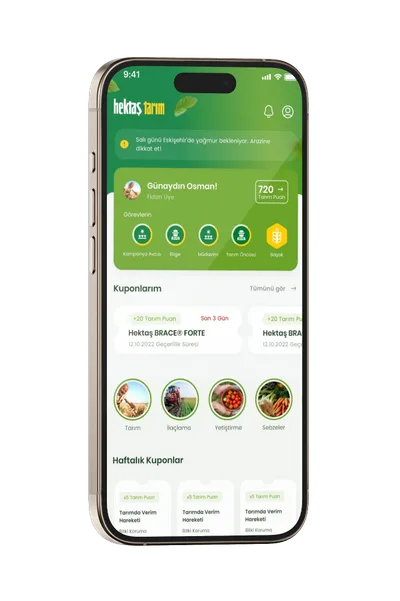
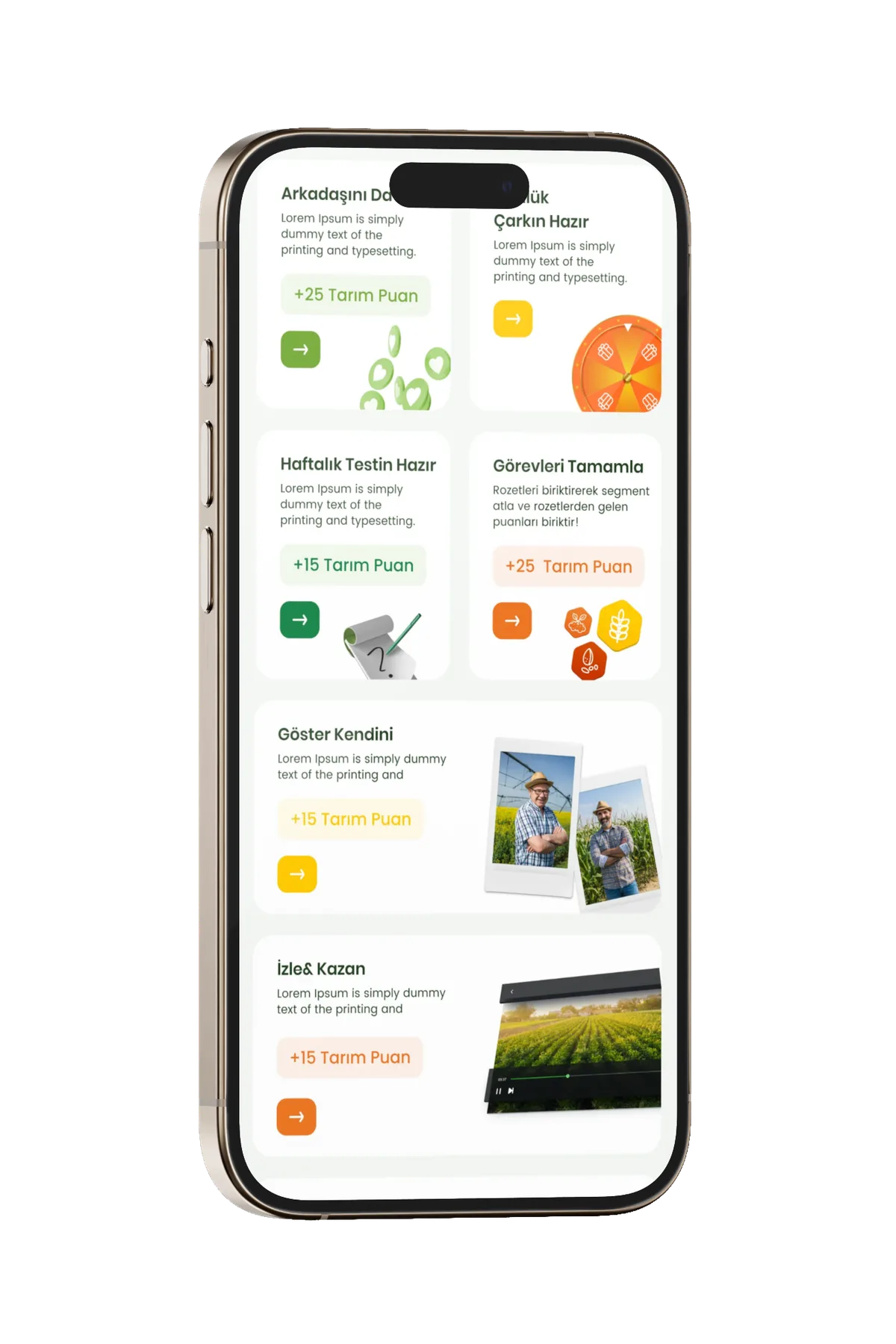
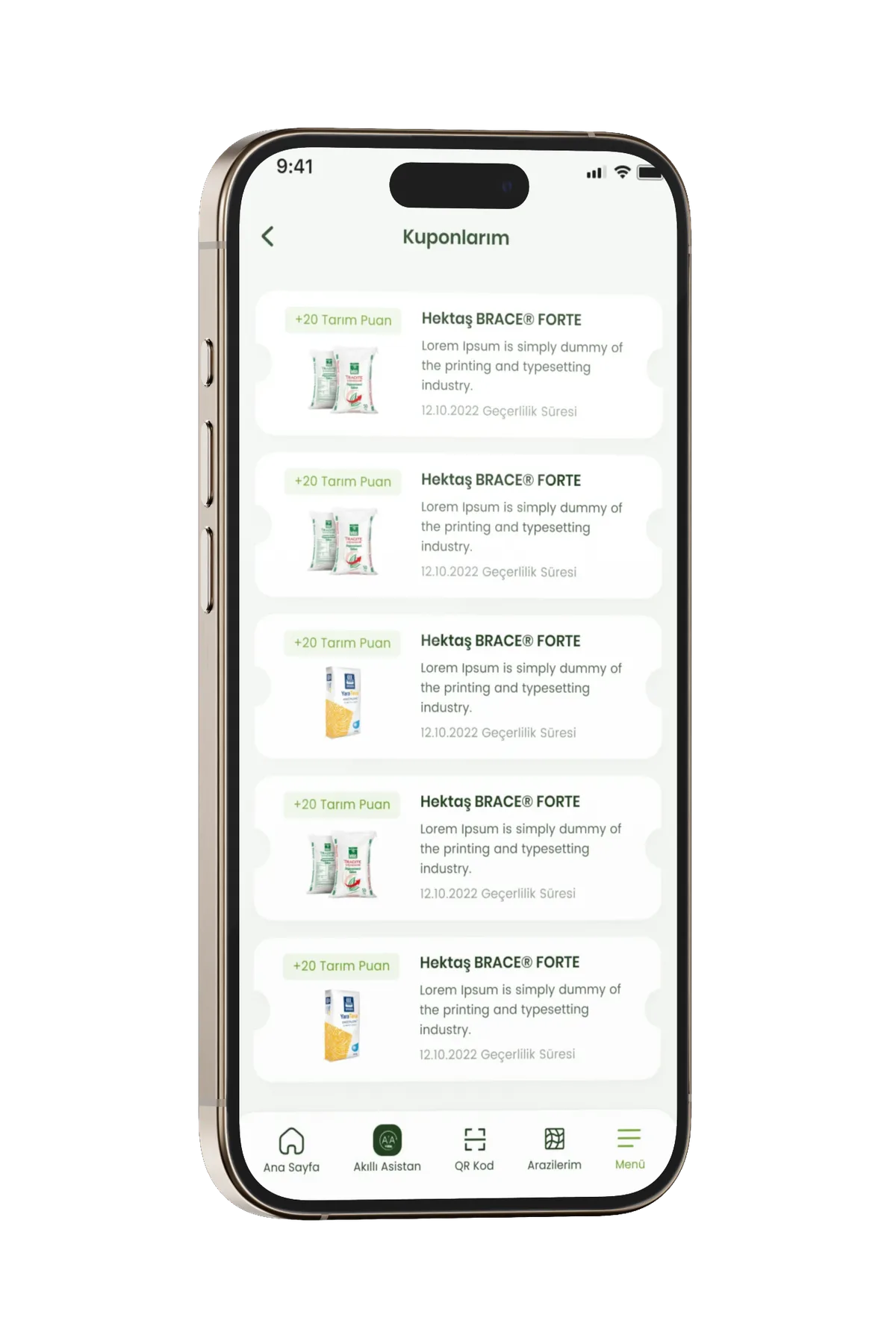
I made all three calls: I synthesized the research, weighed and justified the alternatives, and implemented them in the UI.
I validated the structure before colour and brand: a flow even the least digitally literate dealer can move through without stalling.
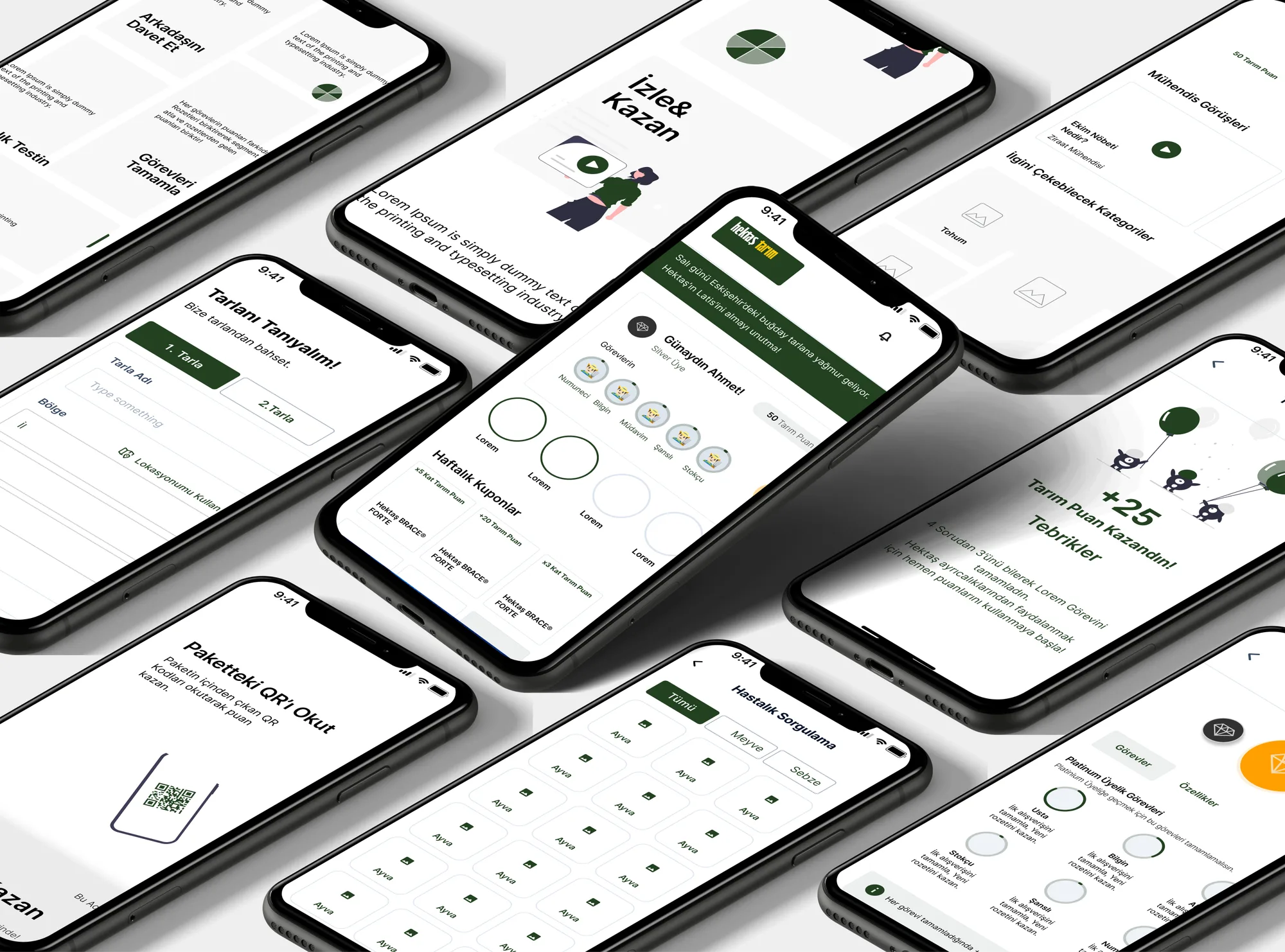
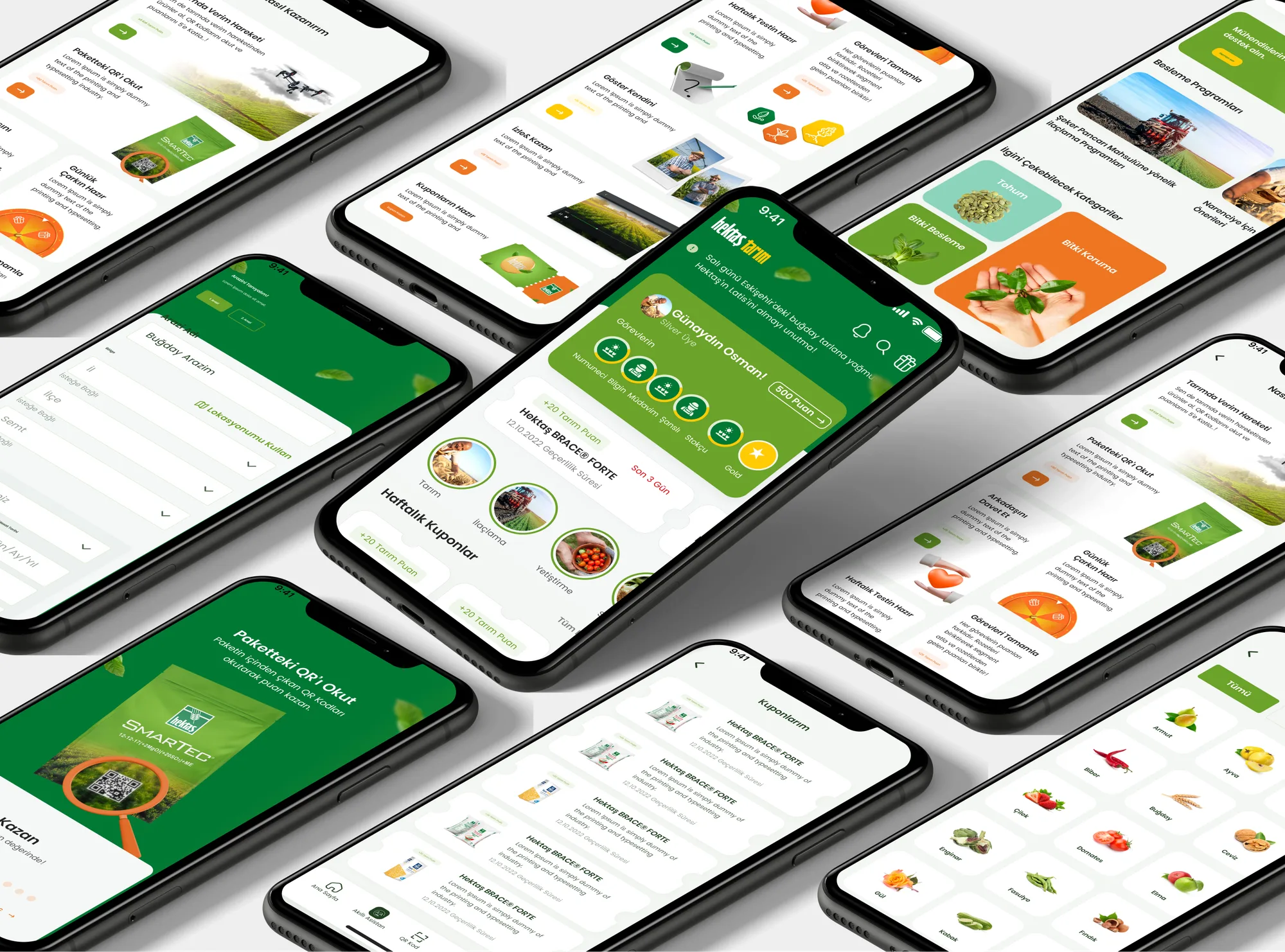
I built the system for the lowest digital literacy: large touch targets, high contrast, single-purpose cards. Hektaş green carries trust; orange carries action.
I built the design system from scratch and calibrated it to the lowest digital literacy: I defined the touch targets, contrast ratios and component behaviours.
Loyalty isn't a points balance — it's someone choosing to represent you in their own region.
What I'm proudest of is refusing to treat dealers as one 'user': 96 survey responses and 24 interviews surfaced five opposing motivations, and the design changed accordingly. If I started over, I'd run the research twice — in peak and in off-season — to measure how much the season really moves behaviour.
Revenue told us who was big; only the interviews told us what moved them.
Designing for a user with low digital literacy is designing for everyone.
The same leaderboard thrills one dealer and repels another. A mechanic is worthless until it's tied to a persona.